

2026 Talks
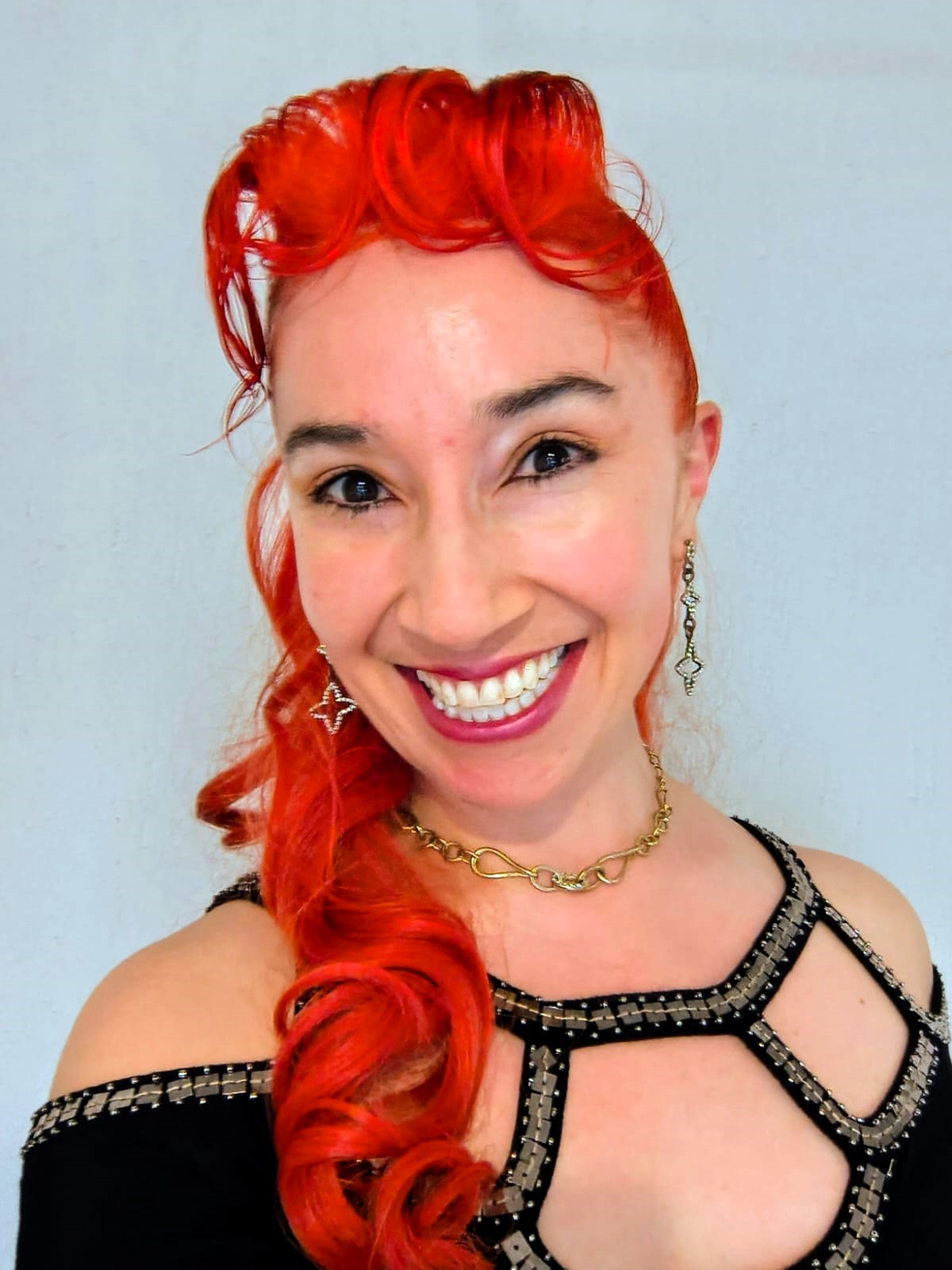
Lingue dei segni indigene del mondo: coreografie di spiritualità e sopravvivenza (RECORDED)
Lingue della conferenza: Italiano e Lingua dei Segni
La voce tace affinché il corpo parli. Esiste una mappa invisibile tracciata da mani antiche che, lontane dal suono, hanno custodito la saggezza della nostra specie. In questa conferenza, esploreremo un universo globale: le lingue dei segni indigene nate non nelle comunità sorde, ma da una comunione assoluta tra persone udenti. Dallo scaltro silenzio tattico dei cacciatori nel Congo, al misticismo delle "Spose del Caucaso", all'epica logistica dei Chaskis andini, fino alla magistrale lingua franca delle Grandi Pianure del Nord America (PILS) che ha permesso il dialogo tra nazioni diverse con diplomazia e visione del mondo, scopriremo che il gesto è la prima tecnologia dell'anima.
Come Ballerina Professionista, la mia vita è una ricerca costante di espressione attraverso il movimento. Questa prospettiva mi permette di vedere oltre il dato antropologico per sentire la cosmogonia, il ritmo, la spiritualità e l'intenzione di linguaggi creati per dialogare con il sacro, proteggere il territorio e sopravvivere fluendo con la natura. Fondendo la ricerca con l'arte della danza, miro a trasmettere questa conoscenza planetaria come un incontro sensibile di profondo rispetto per la comunicazione ancestrale.
Vi invito a riconoscere la nostra sovranità corporea e a onorare le culture che ci insegnano che la mano è un ponte verso il divino. Benvenuti all'eco di un'umanità: coreografie di saggezza millenaria.
Professional Dancer. Mexican Polymath. Magician-Illusionist. Juggler. Polyglot in Spoken and Sign Languages. Creator of “Special Tangotherapy for Patients with Parkinson’s”. Speaker at TEDx: “Tangoterapia, un abrazo de vida.” Choreographer. Gymnast. Nutritionist. Evangelist of Korean Culture in Mexico. International Relations. Volunteering with Elephants, Dolphins and Buffaloes. Dogs Trainer. Member of the Technical Committee of the Mexican Gymnastics Federation. Independent Researcher in Movement Anthropology. Traveling Dancer around the world in more than 35 different countries with her project “Brandy Ruvalcaba The World is my Stage” .
Finding Calm through Language: Italian, Resilience and Wellbeing (RECORDED)
This talk explores how language learning, and Italian in particular, can support resilience, emotional wellbeing and a stronger sense of connection during difficult periods.
Drawing on personal experience of illness, it looks at how learning a language can provide structure, focus and a sense of agency when life feels uncertain. Language can also create mental space: helping us step away from distressing news, reconnect with curiosity and creativity, and begin imagining the future again.
The talk will introduce practical approaches such as journalling in another language, using language study as a focused daily practice, and building meaningful relationships through conversation. It will also consider the wider social value of language learning at a time of increasing isolation and polarisation.
At its heart, the talk presents language learning as a way to create moments of calm, connection and understanding, while strengthening our relationship with ourselves and with others.
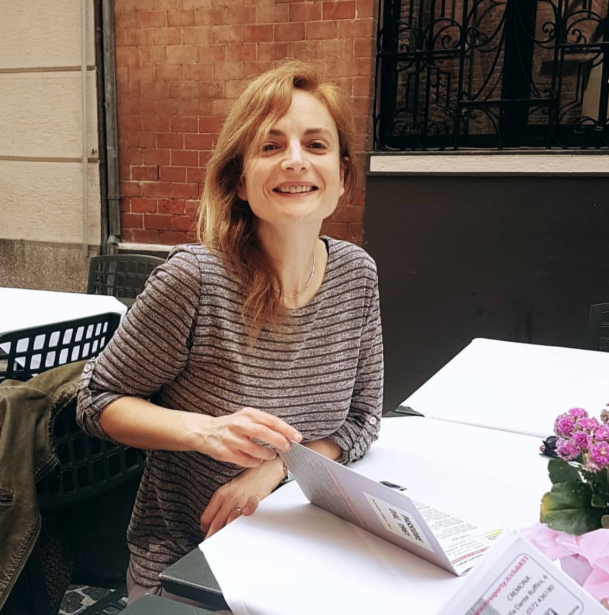
Elfin Waters is an Italian language coach and the founder of All About Italian, where she helps learners experience Italy beyond the textbook through mindful, culturally rich language learning.
In 2013, a serious health incident led her to step away from work for over a year to recover, including coping with memory loss. During that time, she returned to her first love, language learning, and began studying Spanish.
What started as a refuge became a turning point: languages supported her healing, helped her regain a sense of self, and inspired a new path forward.
In 2016, she founded her online business, where she now teaches Italian through a slow, compassionate approach that prioritizes connection, curiosity, and wellbeing.
Through her courses, group classes, and immersive retreats in small-town Italy, she invites students to experience authentic Italian life while building confidence in the language.
She believes language learning can be both transformative and restorative—a way to reconnect with oneself and others—and is passionate about slow living, slow learning, languages and coffee.

Versiones Bibliae Sacrae ad edescendas linguas Italiae (LIVE)
(Bible translations for learning the languages of Italy)
This is a lecture in Latin with English and multilingual slides.
As the core of the Christian faith and its missionary work, the Bible has become the most translated text in the history of the world, and has long been employed by polyglots as a goldmine of useful, familiar texts in new languages that can serve as comprehensible input. In this talk, I will present examples of Bible translations in the minority languages of Italy, such as Corsican, Friulian, Sicilian and others, and demonstrate how one can pick up a new language in a familiar branch of Indo-European languages such as Romance by reading it side-by-side with a known language, or simply reading a Biblical passage that you are already familiar with. I will examine the pros and cons of this approach, explain what pitfalls one should avoid, as well as which books of the Bible, or which sections of them, are the most helpful for picking up a smattering in the new minority language.
A polymath with a particular interest in chemistry, physics, religion, languages and sustainable development. Languages that I have studied: Slavic languages, Germanic languages, French, Catalan Japanese, Hungarian Scottish Gaelic, as well as ancient languages: Latin, Old English, Old Norse, Old Church Slavonic, Hebrew, Greek and Arabic. I also have a Master's degree in chemistry and teach Olympiad-level chemistry at school.
%20-%20Emma%20de%20Polyglotties.jpeg)
I'm NOT afraid of AI stealing my English-teaching job and here's why. (LIVE)
Artificial intelligence has risen in many areas of our lives. For the best and... for the worst. Language learning and teaching are no exception to it. Whether we're in favor or against it, its impact is undeniable. Even though it can be a resourceful tool for immediate feedback, corrections and ways of improvement, some students still struggle in spite of every answer seeming to be up there. As a teacher, I often get the remark that "soon my job won't be necessary anymore" and the question "aren't you scared of the future, as AI may take your place?". To be honest, AI doesn't keep me up at night. And here's why : people are learning to talk to people. They need genuine, natural, spontaneous interaction. The stutter, the hesitations, the filler words, unfinished sentences and overall imperfection that comes with it. While AI works wonders on some learners, some others keep craving humanity. And the latter will keep our profession intact.
Hi ! I'm Emma, a 26-year old English teacher, polyglot, content creator and author from France. I am passionate about languages and I can speak 5 languages : French, English, Spanish, brazilian Portuguese and Italian.
My content is about English / language learning, speaking with confidence and traveling.
I have at heart to encourage French people to go abroad like I did, regardless of the “language barrier” that might scare them. My book was published in June 2023 : L'anglais par les jeux : https://librairie.studyrama.com/produit/5278/9782759055449/l-anglais-par-les-jeux-remise-a-niveau
Le tandem linguistique : guide pratique pour progresser à vitesse grand v (LIVE)
Le tandem est l'un des outils les plus puissants pour apprendre une langue, et pourtant la plupart des apprenants l'abandonnent après quelques semaines. Mauvais partenaire, sessions mal structurées, motivation asymétrique : les raisons d'échec sont connues et évitables.
Traducteur et interprète de conférence, je pratique les échanges linguistiques depuis plus de quinze ans dans huit langues. C'est grâce au tandem que j'ai progressé dans la quasi-totalité d'entre elles. L'un de mes partenaires italiens est passé d'un niveau A1 à B2+ en moins d'un an, à raison d'une à deux heures de pratique quotidienne.
Dans cette conférence, je partage ce que j'ai appris par l'expérience et par l'erreur.
Nous verrons d'abord comment trouver un partenaire sérieux : quelles plateformes utiliser, quels critères privilégier, et comment évaluer dès les premiers échanges si la relation a un avenir.
Nous aborderons ensuite comment structurer ses sessions pour maximiser les progrès : fréquence, durée, répartition du temps entre les deux langues, et façon de donner un feedback utile sans décourager.
Enfin, je partagerai les conditions psychologiques qui font la différence : comment mettre son partenaire à l'aise dès le départ, comment aligner les niveaux de motivation, et pourquoi il ne faut pas attendre d'être "prêt" pour parler.
Cette conférence s'adresse à tout apprenant de langue, quel que soit son niveau ou sa langue cible.
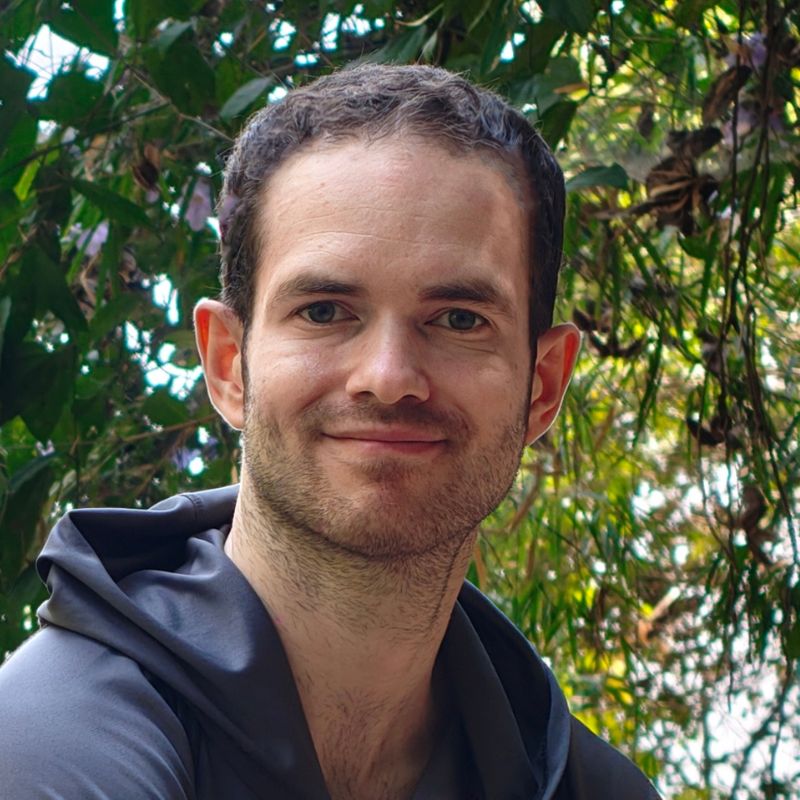
Maël is a French translator and interpreter based in Italy.
As a child, he dreamed of meeting the genius from the lamps so that he could ask him one thing: the ability to speak every single spoken language in the world. He quickly realised this was very unlikely to happen and decided to set himself a life goal: speaking 10 languages, ideally by the age of 30. Fast forward (a lot of mistakes, trips, and incredible encounters later) he turned 31 speaking 8 languages. He learnt most of them alone through full immersion and language exchanges. Years of practice allowed him to hone his method, a method he is now sharing around the world to empower language learners from all backgrounds. Maël is convinced of two things: language learning brings people together, and with the right method and enough time at hands, anyone can learn any language.
Tailored Language Learning Materials with Generative AI. (LIVE)
Generative AI has opened up a new frontier for independent language learners by making it possible for them to create study materials that are tailored to their own levels, goals, and interests. In my presentation, I will share about my journey with using ChatGPT to prepare for the Level N2 (CEFR level B1/B2) Japanese Language Proficiency Test (JLPT). Preparing for this test has involved learning a large number of words and grammar patterns. Although preparation books on grammar and vocabulary have been very helpful, I have had difficulty finding reading material appropriate to my level that can help me to retain what I learn. With ChatGPT, I have been able to not only get detailed descriptions of grammar patterns and vocabulary words, but also to create reading passages that use them and questions to go with the readings. I have also used ChatGPT to critique sentences that I write. Being able to see words and grammar patterns used in a variety of contexts and being able to get feedback on my writing samples has allowed me to developing an understanding of what I learn that goes far beyond that which is possible with rote memorization. Using ChatGPT is also helpful for automating repetitive tasks. I have also been able to use ChatGPT to conveniently create vocabulary lists from existing content (e.g. vocabulary books, online articles). The methods I discuss can also be applied to other languages.
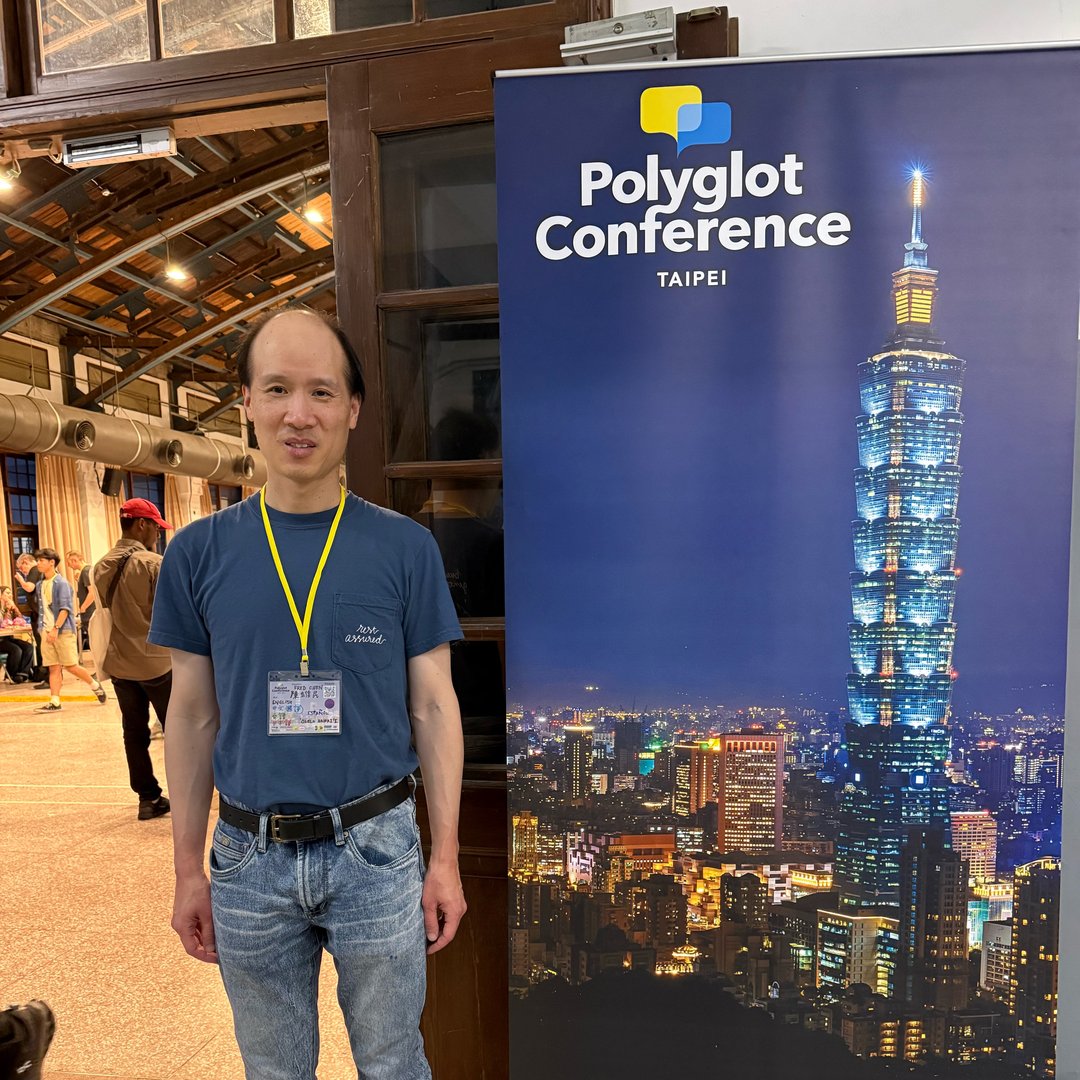
Fred is a 2nd-generation Taiwanese-American. He grew up with English, Mandarin Chinese, and Taiwanese, and learned Spanish and Japanese in school, and since then has enjoyed learning other languages. He is an electrical engineer and is interested in seeing how his skills in AI and signal processing can be used in the world of languages.
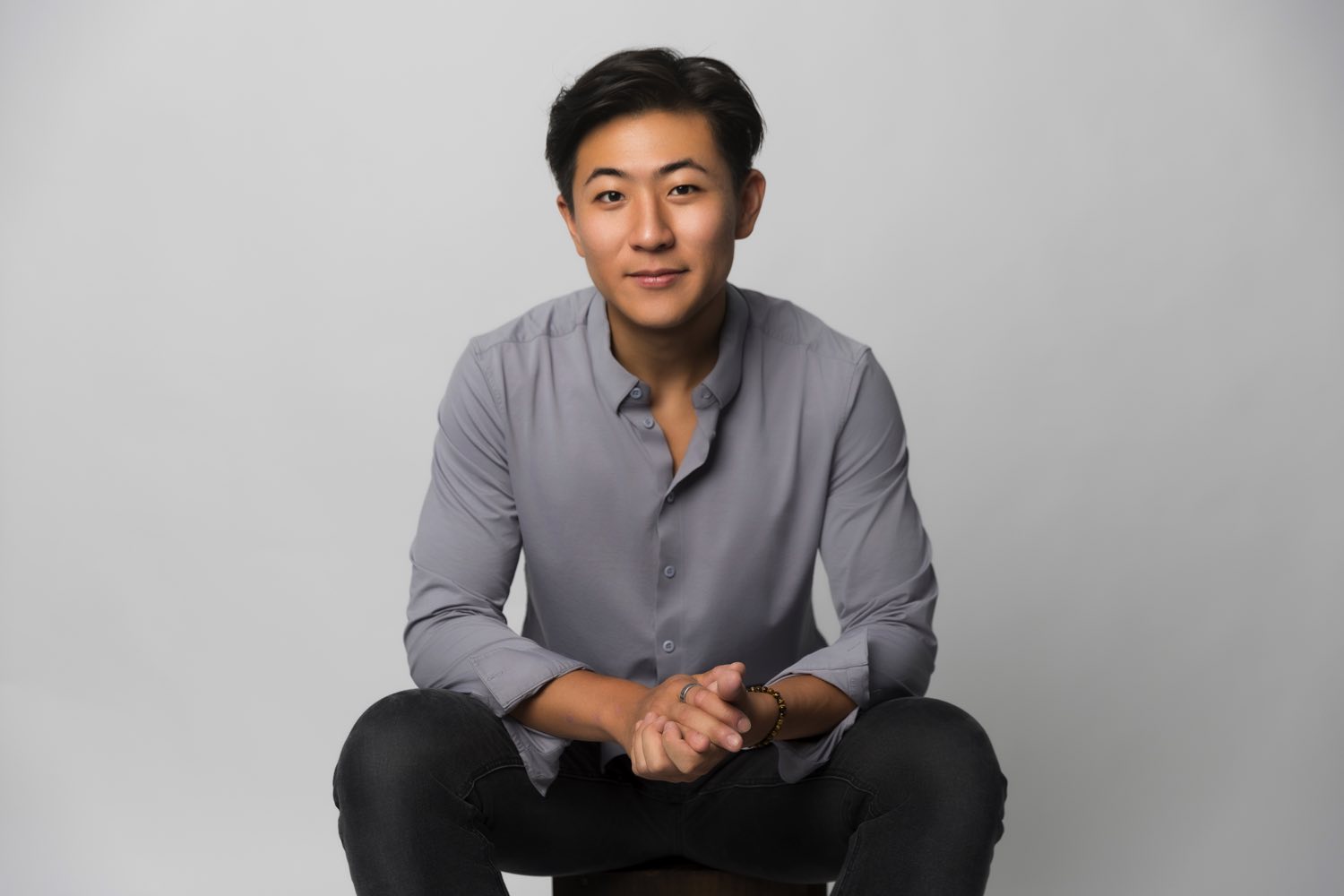
The Stage Show Route to Fluency: A Polyglot Hypnotist's Methods (LIVE)
It's one thing to learn a language. It's another to perform a one-hour live show in it, in front of a paying audience.
The American Hypnotist will demonstrate an unexplored side of language learning: Stage performance. It's one thing to learn a language, but how does one perform a show in it?
Having learned Portuguese from zero to performing a live hypnosis show in Brazil in two months, he has simplified language learning to a formula of 300 words, that when are used on stage, brings the feeling of fluency that apps and courses will never teach you. He will share the framework he uses to build a stage show and provide a feeling of shock and awe to any audience. He will also delve deep into the idea that it doesn't matter how many mistakes you make or what words you don't know, as long as you are confident in your vocal self.
The presentation will be interactive in two ways:
1. The American Hypnotist will, drawing from his international stage performance experience, demonstrate how to build authority with your voice and your body presence.
2. At the end of the presentation, he will hypnotize willing participants to feel a new sense of confidence when it comes to speaking.
Edmund Zheng is the world's first polyglot hypnotist, on track to perform 5 live hypnosis shows in 5 countries in English, Spanish, Portuguese, French, and Chinese. Following a college education at Yale, he traveled the world to 56 countries before realizing that knowledge about hypnosis, a tool that can changes peoples' lives, was largely absent from many parts of the world. He is more passionate than anyone about sharing everything he can about hypnosis, especially in other languages.
Embodying the language: lessons from visual languages for every language learner. (LIVE)
What happens when learners encounter a language in a completely different modality? Higher education students learning sign language often discover that strategies developed for spoken languages do not always transfer smoothly to a visual language such as British Sign Language (BSL).
Learning begins with awareness: awareness of how meaning is created and shaped by culture, context, and human interaction. This becomes particularly evident when students encounter a visual language for the first time. While learners of spoken languages often rely on strategies such as memorisation, pattern recognition, and communicative practice, sign languages require additional skills linked to visual attention, spatial awareness, body movement, and muscle memory. Meaning is conveyed not only through words, but also through the coordinated use of hands, face, space, and movement.
Drawing on focus groups with UK university students, this session explores visual languages and Deaf cultures through a comparison of spoken and signed interaction. Participants will examine similarities and differences between hearing and Deaf communities, as well as the relationship between sign languages and Italian gestures. Through examples of successful exchanges, misunderstandings, and (mis)communication, participants will reflect on their own language learning strategies and assumptions about how meaning is created and interpreted.
The session also considers how sign languages, like spoken languages, evolve in response to social, cultural, and technological change, challenging the common misconception that they are universal or static. Ultimately, the journey from speech to sign reminds us that language is not only something we speak, but something we see, feel, and embody.
I am Associate Professor in the Department of Languages and Cultures at the University of Reading. As a multilingual educator, polyglot, and language enthusiast with over twenty years of international experience, I specialise in inclusive pedagogy, multilingualism, intercultural communication, and accessibility.
Drawing on my expertise in language education and disability awareness, I established and continue to lead the University's British Sign Language (BSL) provision, which has become one of the most popular language programmes at Reading. As a former BSL student myself, I am passionate about promoting greater understanding of visual languages, Deaf culture, and inclusive communication.
My practice-based research examines how learners develop and adapt their strategies when moving between spoken and visual languages, and what these different modalities can teach us about language learning more broadly. I have collaborated on international projects and delivered keynote presentations, workshops, and training programmes across Europe, including a training programme on digital accessibility for the Directorate-General for Translation and Clear Language of the European Parliament, alongside work in Poland, Latvia, Georgia, Moldova, and Azerbaijan. Through this work, I have supported educators, translators, and other professionals in developing more inclusive approaches to language, communication, and learning.
Train your brain to concentrate (LIVE)
Many polyglots obsess over memory techniques, flashcards, spaced repetition and hacks, but the real issue is usually not the memory. Every person on the planet has more or less the same ability to remember things. What really matters is concentration.
Have you ever experienced reading a text without understanding it, because your thoughts were elsewhere? We all did. This is a lack of concentration. The greater the concentration, the greater the understanding. And once we truly understand something, we remember it naturally.
Concentration is focus. Concentration is willpower. It is the ability to keep the mind on one object, one sentence, one sound, one meaning, without constantly being dragged away by noise, emotions, notifications, fantasies or inner monologues. And this ability can be trained.
The best way to train it is meditation. Not just awareness-mindfulness-new-age crap, but real meditation, as taught by Patanjali more than two thousand years ago. In this talk, we explore the process of concentration and recent scientific findings on how meditation changes the brain. And most importantly, how language learners can benefit from it.
Nasta Reznikava. Journalist with more than ten years experience in Belarusian and German media. Speaks five languages, keeps learning more. Meditation nerd.
Italian Linguistic Influence on Turkish Through Italian Levantine Communities (RECORDED)
Levantine refers to people of European origin who settled in the Ottoman Empire, particularly in İzmir and İstanbul. The communities forming this society were primarily of English, Italian, French, Hungarian, and Slavic origin.
Italian Levantines played an important role in the social, cultural, and commercial life of the Ottoman Empire, especially in cosmopolitan port cities such as İstanbul and İzmir. Through centuries of interaction in trade, maritime activities, architecture, music, and everyday urban life, numerous Italian-origin words entered Ottoman Turkish and later modern Turkish vocabulary.
This presentation examines the linguistic legacy of Italian Levantines in Turkish within the framework of language contact and Mediterranean multiculturalism. The study focuses particularly on lexical borrowing from Italian into Turkish and categorizes these borrowings according to semantic fields such as commerce, navigation, urban life, cuisine, and art.
Examples including banka (banca), balkon (balcone), pusula (bussola), makarna (maccheroni), and piyano (piano) demonstrate how linguistic exchange reflected broader cultural interaction between Ottoman society and Levantine communities.
Rather than viewing these words merely as foreign borrowings, this presentation argues that they represent living traces of intercultural communication and urban coexistence in the Ottoman Mediterranean world. The study also highlights the multilingual character of Ottoman port cities and the role of Italian as a significant lingua franca in trade and maritime communication.
By combining historical linguistics, sociolinguistics, and cultural history, this presentation aims to contribute to discussions on linguistic diversity and cultural interaction in the late Ottoman period.
I am a Turkish language enthusiast who speaks Italian, English, French, German, Swedish, Danish and of course my mother tongue Turkish. I live in Bursa, in Türkiye. I am a mechanical engineer (MSc.) and a sworn translator in those languages.and my language journey began with learning French on my own during my university studies. After discovering the joy of language learning, I continued with Italian. I learned Italian as well on my own. I gained a scholarship from the Istituto Italiano di Cultura Carlo Goldoni for an Italian language school in Bologna in 2005. The first city I had visited in Italy was Bologna, I enjoyed it a lot and still my favourite Italian city since that time, even though I have visited more than 15 cities in Italy after that. So that conference, being in Bologna, has an extra special meaning for me. I have visited 28 countries, and I am always eager to learn new cultures. As a sworn translator, I mostly translate in Italian and English. I also teach Italian to students who plan to study in Italy. I worked in FIAT R&D for ten years, so I also had experience to meet italians and Italian culture during my professional engineering life. I still support Italian and Turkish industrial business people in Türkiye and in Italy through interpretation in the Italian-Turkish language pair through my engineering consultancy company, in which I currently work. I studied my Master's degree in Mechanical Engineering in Sweden, even it was an English-taught study, I spent effort to learn Swedish through voluntary academic Swedish courses in the university and through listening to people and using the language in daily life during my three years in Sweden. I also taught Swedish in Türkiye to the doctors who planned to work in Sweden individually and in groups. This is a little summary of my love for language, which is always with me in my daily life. I studied for my bachelor's degree and lived for five years in Izmir, where Italian Levantines have existence which is the subject of my proposed presentation.
German as a Heritage Language in the USA (LIVE)
At first sight, perhaps no one would think of German as being in a vulnerable position with its millions upon millions of speakers and rich heritage backed by strong economies...unless one considers where exactly it is spoken. It is used as a minority language and cultivated as a heritage tongue in numerous places around the world, ranging from Australia, Namibia, Brazil, and the United States to countries closer to the German heartland, such as Italy and Poland. I grew up as a heritage speaker in the US, learning the language both in school and from relatives. There are now significantly fewer speakers than in the 1970s when I was using German on a daily basis; yet pockets still persist to this day.
I will draw on my personal experience to talk about the rise of German in the US, such as the proliferation of German newspapers and publishing houses, church services, and other organizations and events that preserve the language. Colored by English, German dialects in America have developed their own
characteristics in pronunciation, vocabulary, and grammar. German in turn has exerted a strong influence on the English spoken in Wisconsin and other areas. I will give examples of all these phenomena and share some stories about German and English usage in the places where I have lived.
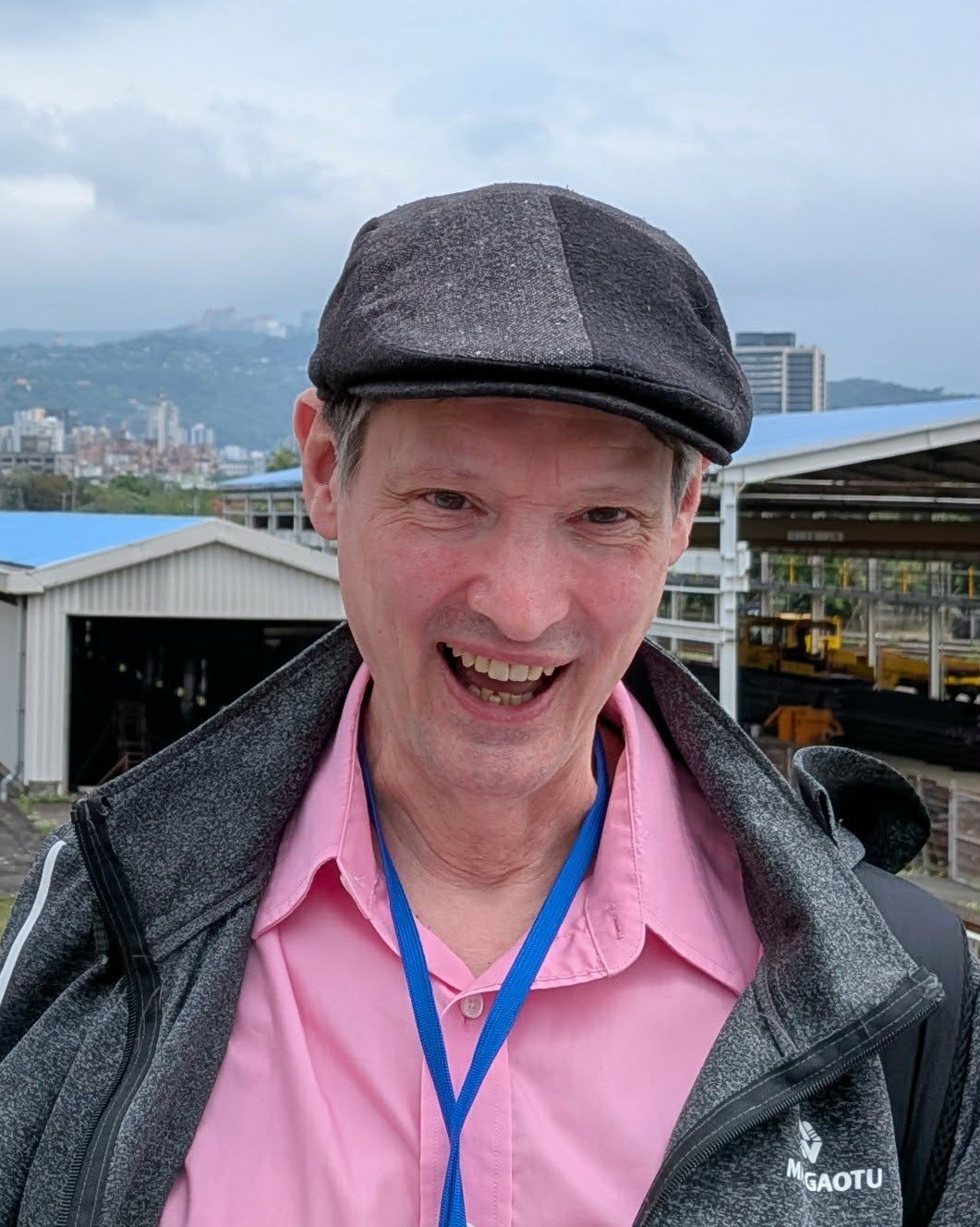
I grew up in Wisconsin, the state with highest percentage of German heritage in the US. I learned German both in school and from relatives, as my grandparents, aunts, uncles, cousins of my parents all grew up speaking it, mostly in rural areas of the southeast. I also took full advantage of resources that were available back in the 1970s, including newspapers and other published materials, radio programs, and even folk festivals where speakers gathered. By the time I was 18, I had amassed a decent library of German publications, almost all of them printed within the US. I studied German literature in college and later linguistics. I now live in Taiwan, where I teach English, public speaking, and drama at the University of Taipei and occasionally give lessons in German in other institutions. Because of my experiences as a speaker of a minority language, I have become interested in other vulnerable speech communities, especially in Taiwan, where I have researched the Tao language of Orchid Island. I presented my findings on Tao in 2025 at the Polyglot Conference in Taipei. "German as a Heritage Language in the USA" I recently presented in Asiaglot 2026, also in Taipei, where I was fortunate in having a receptive audience. After getting some encouraging feedback, I now hope to share this topic with even more people.

Different Policies, Similar Outcomes: Language Shift in Kurmanji Kurdish and Yami under Dominant-Language Pressure (RECORDED)
Language endangerment under dominant official language pressure has been widely documented; however, systematic comparative analysis across politically distinct contexts remains limited. This article examines the sociolinguistic vitality of two languages: Kurmanji Kurdish in Türkiye and Yami (Tao) in Taiwan. The two languages are subject to structurally distinct but functionally convergent situations of dominant language pressure in their respective countries. Through the application of the UNESCO Language Vitality and Endangerment framework (Brenzinger et al. 2003) and the Expanded Graded Intergenerational Disruption Scale (Lewis and Simons 2010), this study presents a tertiary analysis of existing demographic, sociolinguistic, and documentary evidence for both linguistic communities. Despite significant differences in the legal and geopolitical mechanisms through which Turkish and Mandarin Chinese have achieved dominance, both Kurmanji Kurdish and Yami demonstrate convergent patterns of intergenerational transmission failure and progressively diminishing institutional presence. In the case of Kurmanji Kurdish, structural and political marginalization driven by the Turkish state’s assimilationist language policies has constituted the primary mechanism of dominance; in the case of Yami, monolingual Mandarin education policy and economic incentivization have together produced comparable outcomes of vitality decline. The analysis reveals that dominant-language schooling and the economic incentivization of a monolingual national presence are the primary drivers of shift in both cases, operating independently of the specific form of state language policy. These findings suggest that the mechanisms through which dominant language policy produces vitality decline in minority languages are primarily structural, rather than operating through direct legal prohibition alone.
Bahri Çağrı Toygar is a high school student at The Koç School in İstanbul, Turkey. Being intrigued by language learning methods and linguistics, he has endeavored to learn a plethora of languages by himself such as German, Italian, Chinese, Russian, Hebrew and Japanese! He is deeply interested in the way that distinct cultures express themselves through colloquial diction and how the cultural differences affect linguistics aspects such as grammar and idioms. He also bears a special interest in the way that foreigners learn the Turkish language.

30 Years in the Language Classroom: Activities and Techniques That Work (RECORDED)
Drawing on 30 years of language teaching, primarily in higher education, this talk offers a fast-paced overview of activities and techniques that have proved effective in the classroom. It will cover a range of approaches, from simple analogue activities to technology-enhanced methods, with a focus on practical ideas that teachers can adapt and use with their own learners.