

Unreleased Talks
These are talks from previous Polyglot Conferences both online at Global and in-person. You get to see them before anyone else during the Polyglot Conference Global event each year!
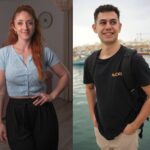
El reto del multilingüismo en España: ¿por qué los españoles no aprenden idiomas extranjeros?
Pese a ser un país con una diversidad lingüística considerable, España sigue teniendo uno de los porcentajes de población más bajos de dominio de un idioma extranjero. Varias comunidades autónomas cuentan con numerosos programas en sus respectivos idiomas cooficiales, sin embargo, cuando se trata de aprender idiomas extranjeros, la situación es mucho más dramática, especialmente, en el caso del inglés.
En esta charla, exploraremos este fenómeno, de la mano de Andrea y Pedro, dos ejemplos de españoles que han roto la estadística, aprendiendo múltiples idiomas. Entenderemos por qué existe un problema subyacente con el modelo actual y cuáles son las causas originales de un problema que lleva persistiendo durante años en el país ibérico, así como en las posibles soluciones que podrían ponerle fin.

Taiwan, Malaysia, Indonesia, the Philippines and beyond – Five thousand years in 10 words
Taiwan was the starting point of the prehistoric world’s most incredible human migration by sea: the Austronesian expansion. Thousands of years ago, Taiwanese aboriginal sailors began sailing south to the Philippines and eventually spread out in all directions. Over the next few millennia their descendants brought their languages and cultures to a vast region stretching from Madagascar to Hawaii. In this very brief introduction to just how little the core vocabulary in some of their daughter languages have changed, we will take a look at ten words that can still be recognized by speakers of indigenous languages from across more than three-quarters of the Earths circumference, all descended from the languages brought by ancient sailors from Taiwan thousands of years ago.

The Revitalization of Basay: Past, Present, and Future through Corpus Design and Natural Language Processing
Basay is an extinct Formosan Austronesian language once spoken in northeastern Taiwan. Unlike Siraya, which survives solely through 17th-century missionary texts, Basay benefits from rare audio documentation collected by Erin Asai in 1937. These recordings capture speech from two elderly speakers representing its two major dialects: the Northeastern (Santiau) dialect and the Trobiawan dialect. While scholars such as Shigeru Tsuchida (1991) and Paul Jen-kuei Li (2014) have published partial transcriptions and lexical materials, no comprehensive corpus or publicly accessible platform has yet been established.
This presentation introduces an ongoing grassroots project aimed at preserving and revitalizing Basay through digital methods. Building upon prior phonological and comparative research—including Proto-Basay reconstructions proposed in Li-yang Tseng’s 2022 dissertation—the project integrates computational and historical linguistics to develop a structured corpus and modern search interface using Markdown, YAML, and NLP-enhanced tools. It seeks to reconstruct dialectal phonological variation, annotate texts with rich metadata, and deliver an intuitive platform for both researchers and community learners.
By leveraging open corpus methodologies, multilingual glossing, and comparative analysis with sister languages (especially Kavalan), this project explores how technology can serve as a bridge between archival data and linguistic revitalization. The presentation highlights both the challenges and the possibilities of reviving an extinct language and reimagining its role in cultural identity and pedagogy.

Living in Full Color: A New Vision for Language, Culture, and Connection
In today’s connected world, speaking only one language can feel like watching life in black and white when it’s meant to be lived in full colour. This presentation is a playful and inspiring call to action for young people to embrace language learning not just as a skill, but as a gateway to empathy, opportunity, and global citizenship.
Through stories, humour, and a fresh perspective, we’ll explore how learning new languages reshapes the way we think, deepens cultural understanding, and builds confidence in surprising ways. You’ll see that becoming a polyglot isn’t reserved for the super-genius or frequent traveller — it begins with small steps, daily curiosity, and the courage to sound silly.
Whether you’re fluent in one language or just starting out with a few words, this session will share practical tips, motivating stories, and a renewed sense of wonder for what language learning can do — for your mind, your future, and your connection to others. The path to becoming a polyglot doesn’t start with perfection. It starts with one word.

Introduction to dxʷləšucid and the Salishan languages
The Pacific Northwest of North America is notable for the diversity of its indigenous languages, and is home to several language families including the Salishan languages, which are famous for their complex phonologies as well as a number of interesting grammatical features.
Since moving to Seattle this year, I have been attempting to learn more about these languages, with a focus on the Lushootseed (or dxʷləšucid) language of the Puget Sound region where Seattle is located.
In this talk, I will discuss the history of and interrelations between indigenous languages in this region, the impact of contact with colonial languages (mainly English and French), as well as efforts to preserve and revive Lushootseed and other Salish languages. I will also introduce the sound system of Lushootseed and the most significant aspects of its grammar, in particular verb argument structure and derivational morphology. I will also share resources for further study of these languages as well as examples of media produced in Lushootseed.

From Zero to Connection: My Language Leap
I grew up in Eswatini with a love for words but no real exposure to foreign languages. That changed at 18 when I moved to North Cyprus, Turkey, for university. Days before my flight, I downloaded a language app and learned a few Turkish phrases out of curiosity, not confidence. The sounds were alien, and I doubted they’d be useful. But at the airport in Istanbul, something magical happened: I spoke those “weird” words, and people understood me. They smiled, praised my effort, and showed kindness.
This moment lit a fire in me. I started using Turkish everywhere—on campus, in supermarkets, in dorms. Speaking Turkish transformed how people treated me, from indifference to warmth. That basic knowledge of Turkish changed everything. I spoke a few simple phrases, people lit up, they encouraged me, and suddenly I wasn’t just a foreign student, I was a welcome one.
I began collecting languages like souvenirs, learning just a few phrases from the international students around me. I tried this method with Arabic, Russian, Igbo, Urdu, Swahili, and many more languages. Each one gave me access to new friendships, ideas, and insights. It became a passion, a lifestyle, and then a science.
Later, a psycholinguistics lecture in my psychology degree gave scientific clarity to what I was experiencing. This talk is the bridge between personal experience and scientific principle. I’ll share my insights and how this method reshaped my entire approach to learning languages.
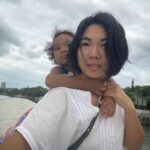
My Life with Taigi
I grew up in a home and community where everyone spoke Taigi. Even through middle school, I spoke Taigi with my classmates. It wasn’t until I went to high school in the city that I stopped speaking Taigi with my peers.
For me, the language someone uses often defines the kind of friendship we have. People who speak Taigi are closer to me, compared to Mandarin speaking friends.
I originally thought that if I married a Taioanese man, I would raise my children speaking Taigi. But since I married a foreigner, I ended up using Mandarin, the more dominant language, with my first child. This was partly because I wanted my husband to be part of the conversation. Still, I would switch to Taigi when talking about our children with friends, so they would not overhear what we were saying about them.
My friend Sió Ngá showed me what it means to be a true Taioanese person, Taigi should be one’s primary language. I immediately followed her example. I explained to my husband why this was important to me. Since his own country had been colonized by Europeans, he fully understood my perspective.
Older generations always praise us when they hear my children speaking Taigi. Our family became a kind of example that encouraged others around us to start using Taigi with their children too. Eventually, we gathered like-minded people and founded a nonprofit to help parents raise true Taioanese children. On the negative side, younger people often show hostility toward Taigi speakers. For example, clerks at convenience stores sometimes treat me poorly simply because I am speaking Taigi, making no effort to understand me. If I were a foreigner speaking English, they might also have trouble understanding, but I doubt they would treat me the same way.
Voices of the Land: Phonology, Syntax, Scripts and Survival in U.S. Indigenous Languages
This 20-minute talk explores the rich linguistic diversity of Indigenous languages in the United States, focusing on phonological and syntactic features, writing systems, and ongoing revitalisation efforts. Over 300 Indigenous languages were once spoken across what is now the U.S.; today, fewer than 150 remain, many critically endangered. Yet these languages offer profound insights into the nature of human language.
Phonologically, Indigenous languages display remarkable variation—from glottalised consonants and uvular fricatives in Salishan languages to the tonal and nasal systems of Athabaskan and Muskogean families. Syntactically, many exhibit polysynthesis, where complex ideas are expressed in a single word, and ergative alignment, challenging familiar subject-verb-object structures. The talk will highlight examples from languages such as Navajo, Mohawk, and Cherokee.
In terms of writing systems, the diversity continues. While many Indigenous languages have adopted Latin-based orthographies, others use unique scripts—for example, the Cherokee syllabary, invented by Sequoyah in the 19th century. Writing plays a crucial role in both preservation and cultural identity.
The final section will focus on revitalisation: immersion schools, community-run workshops, language-learning apps, and partnerships with universities. These efforts reflect both the urgency and determination of Indigenous communities to reclaim linguistic sovereignty and pass on ancestral knowledge.
Rather than relics of the past, these languages are living systems with relevance today. This talk invites listeners to appreciate their complexity, support their survival, and recognise them as vital parts of the linguistic and cultural heritage of the United States.
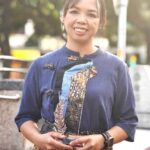
The Polyglot Migrant Worker: The Languages that Transformed My Life
I was born in a remote town in Kalimantan, where bartering was still part of daily life. I spoke Indonesian, Dayak, and Hakka before I could write my name. When foreign missionaries and engineers visited, I longed to speak their language. My mother couldn’t afford lessons, so she bought me a dictionary. I carried it to find foreigners, learning English one word, one laugh, at a time.
After the 1998 anti-Chinese riots, speaking Hakka became dangerous. I left for Taiwan, working on construction sites where Taiwanese-Hokkien rained down in scolding. I made a notebook, memorized five words a day, and within six months, became the bridge between Australian engineers and Taiwanese workers.
Marriage led me to Mandarin, starting from ㄅㄆㄇ(, typing with Indonesian spelling on my keyboard, scavenging second-grade textbooks, and eventually passing the Employment Service Technician Class B certification.
Each language changed me: Hakka rooted me, English opened the world, Hokkien earned respect, Mandarin gave me a voice. Today, as a migrant consultant, award-winning author, and columnist, I know every language I learned was not just words, but another life I got to live.
Languages through Music: How can music transform the way we learn languages?
In this interactive talk, I’ll share the story behind Languages Through Music (LTM) — a method I’ve developed over 10 years of teaching, playlist curation, and working with learners in more than 120 countries.
Building on my TEDx Luanda talk, this session explores how music connects memory, emotion, and identity — and how rhythm and lyrics can boost vocabulary, improve pronunciation, and deepen cultural understanding. I’ll also draw on personal insights from learning languages and my 20 years of experience in education and intercultural training.
Participants will get a first look at the new LTM cards — a fun, creative tool designed to bring music-based learning into classrooms, self-study, and community spaces. Together, we’ll create a playlist and explore how songs can open doors to new cultures.
Whether you’re a polyglot, teacher, or language lover, you’ll leave with practical tips, fresh inspiration, and curated resources to make language learning more playful, memorable, and connected.

Quiet or Misunderstood? Cultural Participation Gaps in Global Classrooms
Asian learners are often labeled as introverted, shy, and quiet.
Western learners? Outgoing, expressive, confident.
So, many language teachers say it’s hard to get Asian students to interact.
But—is that really true?
I’ve taught languages for over 20 years, with students from 75+ countries.
My Spanish classes are mostly Taiwanese; my Chinese classes include Latin Americans in the Dominican Republic, multicultural groups in Taiwan, and classes made up entirely of Japanese or Vietnamese learners.
Across these settings, I’ve seen a consistent pattern:
When we change how we structure participation, student behavior changes too.
Earlier this year in Spain, I joined several Spanish classes taught by local teachers. The interaction styles were clearly tailored to Western norms. Many Asian students barely spoke.
After class, I talked to them privately—they understood the content and wanted to engage, but simply didn’t know how to participate in that setup.
This talk isn’t about who learns better.
It’s about asking a better question:
Are we designing classroom spaces that align with different cultural logics of participation?
I’ll share how I helped Taiwanese students become confident, engaged learners—
and how I guided Western students to thrive with structure and balance.
Because the key isn’t in the students.
It’s in our design, our methods, and above all—our mindset.

How Real-Life Connections Help Children Become Multilingual in Japan
What if children could naturally acquire multiple languages—without studying grammar or going abroad?
In this session, I’ll introduce Global MOM to MOM, a parenting community in Japan where over 700 families—local and international (53nationalities)—connect through real-life interaction.
We host online events three times a day, but we never “teach” languages. Instead, children do things in English and other languages—craft, dance, cooking, Minecraft, and storytime sessions. These feel like play, not lessons. Language comes naturally through joyful experiences.
We also offer in-person events like cultural exchange picnics and family camping trips, where Japanese children bond with peers who speak English—and increasingly, other languages too. Some families speak French, Spanish, Chinese, or Korean at home. Our goal is to support these multilingual families and eventually provide more activities in other languages as well.
Many Japanese children, even from fully monolingual households, now confidently use English—and are becoming curious about other languages. Some have started to learn greetings in friends’ home languages or show interest in multilingual communication.
This presentation will explore how the community was built, why it works, and how it can be a model for creating playful, multilingual learning environments for children. Whether you’re raising bilingual or trilingual kids, or looking for real-world, connection-based strategies, you’ll leave with practical ideas—no passport or textbook required.

The Dong Qing Dialect of Orchid Island's Tao Language
Orchid Island off the southeast of Taiwan, known as Lanyu in Mandarin, is home to the Tao language, spoken by nearly 3000 people. Most studies and published material have concentrated on the speech of Hong Tou Village, the largest and most prominent community. Despite the small size of the island, however, each village has its own special linguistic features. In Dong Qing, where the use of the language is moderate, and in neighboring Ye Yin, where more young learners are found, Tao has a distinctive intonation as well as showing various other features that differ from the Hong Tou dialect. These include the phonology, especially of vowels. There is also free variation in both vowels and consonants, sometimes even with the same speaker, which is rarely indicated in publications. Differences in grammar are seen in the use of the numerous affixes in which Tao abounds. Dong Qing shows some unique prefixes such as one for counting and another for family members. Finally, there are vocabulary differences as well, for example the standard potao cio for ‘wine’, borrowed from Mandarin, versus Dong Qing saki from Japanese. It is astonishing what differences are found in speech communities just a few miles apart. Researchers need to recognize and record these features to help preserve the linguistic diversity of Orchid Island and of Taiwan.

Reaching C1 in Language Learning in the Age of AI
The rise of general language AI models has transformed the way we learn languages. Drawing on 15 years of experience studying over 20 languages—and having reached C-level in 9 of them—Yi-An will review the latest online tools available today. The presentation will also provide tailored strategies for different languages (including minority languages), helping you achieve C1 proficiency in the languages you learn.
Public Speaking in a Foreign Language: Strategies for Multilingual Communicators
Speaking in a foreign language is challenging enough—doing so in front of an audience or on live media adds a new level of pressure. My presentation is designed to help multilingual speakers manage that pressure and become more confident, effective public communicators in their non-native languages.
As a university professor and business owner, I am frequently invited to speak on international affairs. For years, I gave interviews only in English, my native language. With the help of a Mandarin tutor, I began submitting written responses in Chinese and am now preparing for live broadcast appearances. This process has taught me valuable strategies for balancing language precision, confidence, and cultural nuance under pressure.
I will present a structured, repeatable method that combines subject mastery, language rehearsal, and audience adaptation. This approach helps speakers organize their ideas clearly, reduce anxiety, and engage audiences across linguistic and cultural boundaries.
Participants will learn how to:
• Prepare adaptable speaking outlines in a foreign language
• Practice effectively without scripting every word
• Modify tone and delivery to suit cultural expectations
Tools I will introduce include:
• A customizable preparation template for speeches and media interviews
• A checklist for multilingual public speakers
• Techniques for responding to spontaneous questions
The template will be shared with attendees after the conference.
I will deliver this presentation in Mandarin and invite follow-up discussion in English or Mandarin.
The Persian of Iran, Afghanistan, Uzbekistan, and Tajikistan: How Geopolitics and Cultural Dynamics Shaped the Dialects of Modern Persian
Geopolitics and cultural dynamics of the Middle East and Central Asia have drastically impacted the Persian spoken in Iran, Afghanistan, Uzbekistan, and Tajikistan. In September 2025, I am undertaking a course at the University of Central Asia in Dushanbe, Tajikistan, that will explore this topic.
This talk will seek to explore how influence from the Soviet Union, France, Great Britain, and the United States across these four countries altered the vernacular and even at points the structure of the modern Persian language. The countries geopolitical and colonial involvement in this region forever altered the dialects of Persian. From vocabulary words like “bicycle” or “car” to verb conjugation patterns changing across the dialects, this presentation seeks to bring to light the dynamics of one of the oldest languages in the world, spoken since at least the 500s BC. Additionally, I will focus on the importance of preserving languages in the midst of colonialism and geopolitical shifts in order to maintain identity through language.
As a geopolitical analyst, Oxford student, and polyglot speaking 9 languages to various levels, I’m excited to share my knowledge on this crossroads of geopolitics, history, and the Persian world.

Cracking the Code: How Asian Scripts and Tonal Systems Can Be Made Teachable
In 1999, I began working with journalists, diplomats, and UN staff in Bangkok who had given up on learning Thai. Most weren’t lacking motivation—they were simply never shown how the system worked. Concepts like tone class, consonant aspiration, and vowel placement were either ignored or poorly explained. I developed Cracking Thai Fundamentals to address that, and over the years it expanded into a broader framework for teaching tonal and non-Latin script languages.
In 2024, I rebuilt the platform from the ground up using modern web technologies and integrated AI. It became Cracking Language Fundamentals (CLF)—a modular system that supports tonal languages across Asia, including Thai, Mandarin, Cantonese, Vietnamese, and over 300 Tai varieties.
CLF connects learners to the structural systems that underpin these languages—tone rules in Thai mapped against 平上去入 in Chinese and Vietnamese; Hangul’s origins in Phagspa and Brahmi; the Qieyun system’s role in Chinese character classification; and the abugida patterns found across Indic-derived scripts.
The system also helps revive lost literacy. The Khom script—used historically to write Thai and still seen in religious texts and temple inscriptions—has become unreadable to most Thais. With CLF, native speakers are now relearning how to read Thai in Khom.
This talk will show how the platform makes these systems teachable, reusable across languages, and relevant for both endangered and mainstream language instruction. I’ll also show how the tools are used by educators, linguists, and native speakers alike to bring forgotten systems back into practical use.
How Code-Mixing Redefined My Identity
Being born and raised in Costa Rica to Taiwanese parents, I have always thrived in multicultural and multilingual environments. Yet no question has haunted me more than: “Where are you from?” As a Taiwanese-Latina, my sense of identity has been complex, layered, and at times, conflicted. But after living in my parents’ home country for the past decade, I have come to realize how my lifelong habit of code-switching and code-mixing has not only shaped the way I speak, but also shifted my own perspectives on identity.
In this talk, I will share my personal journey through three life stages and in my three dominant code-mixing languages (Spanish, English, and Mandarin), as well as my findings on how code-mixing has steadily influenced how I communicate and connect with others.
Part I – Childhood (Spanish)
• Taiwanese diaspora and the emergence of organic code-switching/code-mixing
Part II – Adolescence & Early Adulthood (English)
• Reinforcement of code-mixing and fresh take on loanwords/borrowing from English
Part III – Adulthood & Future (Mandarin)
• Code-mixing in Taiwan, dealing with cultural stereotypes, language loss and preservation, and reflections on building a multicultural/multilingual family

Chatbot-Based Language Revitalization: The Case of Ladino and Estreyika
Today, AI-powered digital tools are becoming essential for slowing the decline of minority languages and fostering global linguistic inclusion (Zuckermann, 2020). This is particularly urgent for languages with limited intergenerational transmission and a predominance of heritage speakers. One such case is Ladino (Judeo-Spanish), the language of the descendants of Jews expelled from the Iberian Peninsula in 1492. Now classified as “severely endangered” by UNESCO (2003), Ladino has fewer than 30,000 speakers spread across diasporic communities (Yebra López, 2024).
In response, the nonprofit organization Ladino 21 partnered in 2025 with the Catalan cooperative Col·lectivaT to create Estreyika, a multilingual chatbot based on Claude Sonnet 3.5. Available through the Telegram app, Estreyika enables users to learn and practice Ladino for free.
This presentation outlines the development of Estreyika, from the construction and preprocessing of a trilingual corpus (Öktem et al., 2023) and implementation of a Spanish–Ladino translation system, to its integration with Claude Sonnet 3.5 and Telegram. Performance is evaluated through fluency, coherence, and cultural adequacy metrics, alongside human review.
We present sample learning tasks designed for heritage speakers at varying proficiency levels and languages of origin, as well as experiences using Estreyika in university courses at California State University and the University of Oxford. The talk concludes with a reflection on its broader potential in academic and community-based revitalization efforts.
Overcoming Minority Language Shame: How Emotion, Not Pop Culture, Fuels Fluency and Retention
For many heritage or minority language speakers, language is more than just communication—it’s tied to identity, culture, and sometimes, shame. Growing up in Mainland China, I distanced myself from Cantonese, my mother tongue, due to social pressures favoring Mandarin. Despite Cantonese having a strong pop culture presence, it wasn’t enough to keep me connected. My turning point came from two unexpected sources: the loss of my grandmother, who only spoke Cantonese, and a foreign friend’s admiration for the language’s creativity.
Through this experience, I realized that emotional connection—not cultural “coolness”—is the key to retaining a heritage language. This lesson also transformed how I approach learning new languages, like Spanish and Italian. As a teenager, fandoms fueled my fluency in English and Korean, but as an adult, I struggled to stay motivated until I fell in love with Medellín, which gave me the deep emotional tie I needed to commit to Spanish.
This talk explores how language shame develops, why pop culture alone isn’t enough to reverse it, and how finding a personal emotional anchor—whether through family, friendships, or meaningful experiences—can be the most powerful tool for both language retention and learning.
Key Takeaways:
1. Understanding Language Shame: How dominant culture pressures lead heritage speakers to abandon their native languages.
2. The Limits of Pop Culture: Why media representation and cultural “coolness” alone don’t ensure language retention.
3. The Power of Emotional Connection: How personal relationships, nostalgia, and lived experiences can reignite fluency and motivation.
4. Applying This to New Language Learning: How finding a strong emotional tie—whether through travel, friendships, or passion—can help learners stay consistent and committed.
5. Practical Strategies: How heritage speakers and language learners can actively cultivate emotional connections to reinforce learning and fluency.
Learning an Austronesian language without a textbook: Linguistic fieldwork experience in Taiwan
Most people learn a new language by relying on textbooks or other learning materials. However, for smaller and endangered languages, this is often impossible. They might have no, or only very few, educational materials available for those who want to learn or study them. This does not mean that those languages are inaccessible to prospective students, and it can often be gratifying to study languages that are overlooked by most people living around them, or sometimes even by the people who originally spoke them.
Based on personal experience studying the Indigenous languages of Taiwan through immersion fieldwork, I will discuss some approaches to studying, documenting, and learning languages when no language materials are available. Following a brief overview of the historical context, we will explore some fundamental techniques for collecting language data and conducting linguistic fieldwork. We will investigate some of the difficulties that can arise when undertaking this kind of work and explore possible solutions. Finally, we will assess the types of fieldwork that are feasible for professional linguists and enthusiasts. By the end of this talk, I hope to convince you that anyone can do linguistic fieldwork, as long as they are mindful of the pitfalls that can arise along the way.

Influence of Mexican Indigenous Languages on Spanish: Linguistic Diversity, Poetry, Dance, and Culture
Mexico has 68 living indigenous languages, and 364 linguistic variants, which have greatly influenced our Spanish language in terms of lifestyle, linguistics, culture, cuisine, music, dress, and art, allowing indigenous peoples to constantly enrich today’s society. This task has not been easy, as unfortunately, many other Mexican indigenous languages have disappeared, but fortunately, there is now a wide variety of institutional, social, public, and private programs to promote the development and understanding of indigenous languages and prevent their extinction. In this talk, I will discuss all of this, how the linguistic diversity of Mexican indigenous languages enriches different aspects of daily life, Spanish, and the various sign languages that exist in my country. As a professional dancer, I will approach everything from an artistic perspective, through dance, poetry, cooking, culture, and linguistics in a holistic and comprehensive way. We will learn that we all know and use more words from indigenous languages on a daily basis than we imagine, something that, as polyglots, should make us proud, inviting and inspiring us to continue rescuing and promoting the indigenous languages of Mexico and the world.

Llanito Standardization: Preserving Gibraltar's Distinct Linguistic Heritage
In this presentation we will delve into the fascinating world of Llanito, a unique language that stands as a testament to Gibraltar’s rich cultural tapestry.
An extraordinary linguistic blend of Andalusian Spanish and British English, interwoven with elements from Italian, Portuguese, and Hebrew and even Maltese, Llanito embodies the historical and social evolution of Gibraltar, reflecting its diverse influences and multicultural essence. Historically, Llanito held covert prestige, primarily used in informal settings and often overshadowed by Spanish and English. However, recent years have seen a remarkable transition towards overt prestige, with growing recognition of its cultural significance and identity.
As part of this transition, we will discuss and problematize the standardization of Llanito as a means to preserve it. To that effect, we will focusing on the case study of the “Llanito Standadaizeixon Grup”, created in 2012 to standardize Llanito with a view to reverting its perceived lack of prestige and decline. To that effect, this group has produced an orthography, a grammar and an online dictionary.
We will conclude that while preserving Llanito through the development of orthography, grammar, and an online dictionary does present challenges, it need not replicate colonial models. Instead, these can serve as tools for a powerful act of linguistic and cultural affirmation, fostering a living, breathing language that resonates with the unique idiosyncrasy of its speakers.
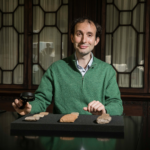
Babylonian: studying an ancient language
Babylonian is a doubly fascinating language to study. Not only does it have, in abundance, the beautiful and highly regular structures which are characteristic of the Semitic family: it also has an extra layer of philological challenges. This is because we do not access the language directly through informants, but rather through writings which use a complicated and sometimes defective system of spelling. The challenge thus never ends: beginners can happily learn their way round the verb, but professional scholars are still working out bits which are ‘fuzzy round the edges’.
This talk (by the author of Teach Yourself Complete Babylonian) will give you an idea of how this all works, taking you through simple sentences from the lawcode of Hammurabi and other sources, and then illustrating the ‘state of the art’ in philological research. No previous knowledge is required.