

2025 Talks
The following speakers took part in 2025, and recordings of their talks will also be available as part of this year’s online programme.

Lenguaje, Neurodiversidad y Libertad Económica: Por qué hablar diferente es una ventaja, no una limitación (LIVE)
Durante años se nos hizo creer que hablar, pensar o comunicarnos de forma distinta era un defecto que había que corregir. Hoy quiero demostrar lo contrario: las personas neurodivergentes y multilingües tenemos una forma única de procesar el mundo, y eso nos convierte en estrategas, creadoras y solucionadoras excepcionales. Esta charla explora cómo transformar la diferencia en motor económico, combinando mi experiencia personal reflejada en mi libro La Hermosa Maldición de Ser Neurodivergente— con herramientas reales para convertir nuestra forma singular de hablar en libertad profesional.
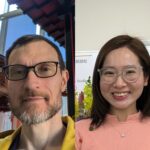
Story share: A CI-based method for acquiring each other's languages (RECORDED)
Since November of 2023, my colleague, Nguyen Hanh and I have been helping each other to acquire Vietnamese (me) and English (her). For the first half a year, we engaged in a method we call “story share,” which is a purely comprehensible input-based activity. In this presentation, we explain how we implemented story share and discuss the results and the next steps that we took to continue our pursuit of each other’s languages.

Professional Language Coaching Overview. Adapting Teaching and Coaching Styles for Learners with ADHD (LIVE)
ADHD is linked to specific brain features that affect the internal regulation of attention, impulses, and self-control. This talk explores how professional language coaching, together with special principles that can be integrated into coaching and other forms of working with learners, can support language learners with ADHD — helping them manage motivation, maintain focus, and progress with complex tasks in language learning.
We will begin with an overview of the method of professional coaching and professional language coaching, which is often confused with teaching or advising. Unlike those approaches, coaching is about deep exploration: asking powerful questions, creating out-of-the-box perspectives on goals and tasks, and building tailored action plans. It also provides a unique system of support that helps clients move through difficult challenges — such as learning a new language — with greater confidence and sustainability.
We will then explore four special principles for supporting learners with ADHD, helping them regulate attention, overcome obstacles, and sustain motivation. These same principles are equally useful for teachers and coaches who themselves have ADHD, as well as for anyone facing similar challenges with self-regulation and consistency.
While studies show that over 90% of people who self-diagnose with ADHD may not actually have the condition, many experience comparable struggles in language learning. Therefore, the method of professional coaching enriched with these four special principles offer valuable support not only for learners with ADHD, but also for the broader community of language learners and teachers.
Instagram(Language Coaching Academy)
Instagram(Language Coaching Academy)
Langues africaines, technologies émergentes et intelligence artificielle : Repenser la transmission linguistique (LIVE)
Dans un monde où l’intelligence artificielle transforme l’apprentissage et la communication, les
langues africaines – souvent sous-représentées dans les outils technologiques – sont à la
croisée des chemins entre disparition et renaissance numérique. Cette présentation propose
une exploration des possibilités offertes par les technologies émergentes (IA, apprentissage
automatique, plateformes numériques) pour revitaliser, enseigner et promouvoir les langues
africaines auprès des diasporas et des apprenants du monde entier.
À travers des exemples concrets issus de projets en cours en Afrique et dans la diaspora, je
montrerai comment l’IA peut être utilisée pour créer des dictionnaires visuels, des applications
d’apprentissage vocal, et des agents conversationnels multilingues. Nous discuterons
également des défis techniques et éthiques liés à la collecte de données, à la reconnaissance
vocale des langues tonales ou à faible ressources, et à la centralisation des corpus linguistiques
par des entreprises globales.
Enfin, nous réfléchirons à la manière dont les communautés linguistiques peuvent s’approprier
ces technologies pour créer un modèle de transmission plus inclusif, décolonial et durable.

What You Need to Know Before You Start Learning a Language (LIVE)
The presentation will explore key mindsets that can transform how we approach language learning. Too often, learners see it as “studying,” focusing only on memorizing vocabulary and grammar. But language is not a subject to be memorized—it’s a skill to be trained, much like building muscle in the gym. To truly master a language, we must train our brains together with our mouths, ears, and eyes through consistent practice.
Another focus will be on the role of emotions. Persistence is essential in any long-term learning journey, but motivation is not always about chasing big dreams. Sometimes, the determination to avoid failure or to overcome frustration can be just as powerful. When learners hit plateaus or face setbacks, it is their ability to manage negative emotions that decides whether they continue or quit.
Finally, the presentation will emphasize the importance of strategy. Social media is filled with promises of quick fixes, but effective learning requires a more thoughtful approach: identifying personal goals, recognizing what is missing, and planning the first steps carefully. Equally important is reflecting on results—what worked, what didn’t, and why. This process can be challenging without guidance, which is why seeking support from experienced teachers or mentors can make a huge difference.
The key message is that language learning is not only about gaining a skill—it is also about self-discovery. Through training, reflection, and resilience, learners not only become capable language users but also gain a deeper understanding of themselves.

The Powerful Questions in Language Learning (LIVE)
By prompting learners to reflect on why they are studying the language and what they aspire to achieve beyond that, I focus on the “effects of questioning”—a shift in perspective that allows learners to re-frame language learning itself and think from different perspectives. I will talk about the approaches that trainers who are new to coaching can implement.

How to expand to other languages without confusing yourself (LIVE)
This session looks at ways to add languages while reducing mix-ups. The speaker teaches English and Spanish in Japan and currently studies Japanese and French. He also brings a New York background and Costa Rican family roots.

Ecological Threats to Linguistic Diversity in Bihar: An Analysis (LIVE)
Langauge and ecology are deeply interconnected. The local languages contain valuable information about the environment including the traditional ecological practices, traditions and biodiversity.
The present study examines the complex relationship between ecological factors and linguistic diversity in Bihar, India. It analyzes how environmental degradation, climate change, and urbanization threaten the sustainability of local languages, including Angika, Bajjika, and Maithili. The research highlights the impact of ecological disruptions on language use, cultural practices, and community identity. Climate change erodes traditional knowledge and cultural practices thereby leading to decline of languages. It transmutes ecosystems into disruptive zones, menacing the linguistic diversity in Bihar. The ecological crisis is a major determining factor leading to language loss, besides non-transmission between generations, political conflicts, and lack of legal recognition. By exploring the intersections between ecology and language, this study provides insights into the challenges facing linguistic diversity in Bihar and emphasizes the need for conservation efforts to protect the region’s rich linguistic heritage. Moreover, certain strategies such as documentation and preservation, ecological sustainability and climate action can lead to sustainability of languages in Bihar.
Mapping the Sociolinguistic Gender-Gap and Overcoming it in Teacher-Student Interactions: (RECORDED)
Currently, I am researching “genderlect”—or, as I prefer to call it, the sociolinguistic gender gap—and what it means for language learning, teaching, and acquisition. In doing so, I draw on existing research but mainly develop my understanding of this topic through these two methods:
Interviews with language teachers
AI-based text and language analysis

How Bilingual Family helps parents raise their children to speak the family languages (RECORDED)
Vice-chair Magdalena Makowski, Secretary Katherine Cannings, Treasurer Silvia Fiddes Ortiz Perea, and Chair Rita Rosenback present their charity Bilingual Family, what they do, and what free materials are available for parents, educators and other professionals who support bilingual and multilingual children. There will be a Q&A session for the audience to ask questions and to find out how to join the charity’s activities.
Instagram
Hal Wyn - his story and significance for the Cornish Revival (LIVE)
Ralph St Vincent Allin-Collins was one of three major figures in the Cornish language revival during the 1920s and 1930s. He was its most fluent speaker and its most prolific writer, but most importantly he stated he was a native speaker of Cornish, having been taught by his parents at a young age. The significance and veracity of this statement are examined as well as his family history. His importance for the revival nowadays is summarised

A Small Niche on a Big Island: The Esperanto Movement in Taiwan (LIVE)
After being a longtime participant in Esperanto gatherings, especially in southern Taiwan, I had the opportunity to share the current situation of the language in a talk at the Hokkaido Esperanto League convention in 2024 and subsequently taught a mini course in the language. I became aware of several differences between Esperanto speakers in Taiwan and those in Japan and surrounding countries. Taiwan language learning is dominated foremost by English. Knowledge of even the existence of Esperanto is slight. Japan, Korea, and China, for example, boast many organizations and clubs with high membership, whereas Taiwan relies on a few charismatic teachers and proponents to inform and attract others. Although there may be numerous reasons for studying Esperanto, I found that some learners in Japan are attracted to it due to ideological motivation, such as politics and social movements, while in Taiwan most people choose to undertake studies through the encouragement of one or two Esperanto gurus. Subsequently, there is just one region in all of Taiwan where most learn and use the language: the rather unassuming city of Pingtung in the southern part of the island and the surrounding area. This gives Esperanto in Taiwan a unique small-town feel in that nearly all speakers know each other and may have picked up the language from the same teachers, leading to an even stronger sense of community than among most Esperantists throughout Asia.

Voluntariados que hablan: cómo servir te conecta con culturas, idiomas, comunidades y oportunidades globales (RECORDED)
El voluntariado no solo transforma comunidades; también transforma a quienes deciden servir. En esta presentación, compartiré cómo el voluntariado —ya sea local, como con Get Up and Go Colombia, o internacional, como con AFS Intercultural Programs— se convierte en una puerta abierta al aprendizaje cultural y lingüístico.
Desde mi experiencia personal, hablaré de cómo convivir y colaborar con personas de diferentes países me llevó a tener mis primeras conversaciones prolongadas en inglés, aprendí a escuchar con empatía, y descubrí formas de aprender idiomas más allá del aula.
Además, presentaré plataformas como Worldpackers y Workaway, muy recomendadas por personas de la comunidad viajera, que permiten acceder a oportunidades de voluntariado alrededor del mundo, muchas de ellas inmersas en un contexto multilingüe.
La charla será una invitación a ver el voluntariado como un catalizador para conectar con comunidades, aprender idiomas de forma práctica, y ampliar nuestra mirada del mundo. Porque cuando servimos, no solo damos: también recibimos experiencias que hablan muchos idiomas.
Ideal para quienes aman los idiomas, están abiertos a nuevas culturas y buscan formas alternativas de aprendizaje y crecimiento personal.

Язык вне политики: почему русский по-прежнему важен (LIVE)
Во времена войны и разделения русский язык стал политически окрашенным — его всё чаще игнорируют, боятся, отвергают. Но можем ли мы, как полиглоты и любители языков, позволить языку исчезнуть из культурного пространства из-за действий политического режима? В этом выступлении я делюсь своим опытом: я говорю и по-украински, и по-русски, публично поддерживал украинскую культуру — и при этом продолжаю защищать красоту и ценность русского языка.
Русский — это не голос власти. Это голос Толстого, Цветаевой, духовного поиска, философской глубины и миллионов людей, мечтающих о мире. Я убеждён: язык не может быть ответственен за политику. И когда мы молчим на языке — мы теряем возможность понимания и диалога.
Я покажу, что говорить по-русски сегодня — это может быть форма сопротивления: не против Украины, а против ненависти, упрощения и культурного стирания. Мы можем сохранить душу языка, не теряя моральных ориентиров.
Моя лекция — не о том, на чьей мы стороне. Она о том, как защитить мост, который строит язык между людьми, когда всё вокруг стремится этот мост разрушить.

The Power of Bianhua: A Comparative Exploration of Transformation in Ancient Sino-Japanese Narratives (LIVE)
Delving into the multifaceted concept of bianhua (變化), meaning “transformation” or “metamorphosis,” across ancient Chinese and Japanese mythologies. The linguistic evolution of this term, from its neutral Chinese origins (bian for gradual change, hua for sudden change) to its Japanese adaptations (henka and henge with positive connotations), highlights a fascinating cultural divergence in how transformation is perceived and categorized.
The exploration reveals how bianhua is intrinsically linked to the “Dao” (道) in China and “kami” (神) in Japan, manifesting as either meritorious or demonic cultivation. Figures like Nu-wa and Inari Okami embody beneficial transformations aligned with universal principles, while characters like the Monkey King and Kiyohime showcase the perils of misguided cultivation or unchecked emotion. The paper further connects bianhua to complex philosophical frameworks such as Yin and Yang, Wuxing, and Wu wei, illustrating how these concepts explain not only individual transformations but also socio-political shifts. This cultural analysis demonstrates how the nuances of “transformation” reflect deeply embedded religious, philosophical, and societal values in East Asian narratives.

Languages in Life (RECORDED)
I am fascinated by a wide range of intriguing language-related topics that go beyond traditional discussions. For example, I want to explore the relationship between language learning and cognitive functions like memory and brain trauma recovery. I am curious about why certain languages resonate more deeply with people emotionally and culturally, and how the brain decides to forget a language, a process often called language attrition. Another area of interest is the neurological comparison of different languages and how they affect our brain differently. I also want to examine how learning new languages impacts mental health conditions such as stress, depression, and trauma. Additionally, I am interested in the competitive nature of languages in multilingual settings—how languages interact and influence one another within communities. These topics not only broaden our understanding of language as a cognitive and social phenomenon but also shed light on the intimate connection between language, identity, and mental wellbeing. By discussing these less commonly addressed areas, I hope to contribute fresh perspectives that inspire curiosity and deeper appreciation for the complexity of human language.
Domhain Eile: Another World - My experience seeing the world through the Irish language. (RECORDED)
If you visit Ireland, you will see that many street signs and place names exist bilingually. From the moment I saw that second language, I needed to know more. I knew what it meant in a sense, it was always paired alongside English. But I longed to understand both languages. Even though I didn’t know much about the language, it felt like knowing it would unlock a whole different world. I was born and raised in America with Irish heritage. I always felt a connection to Ireland, but I never knew how to articulate in words what that connection was. When I began learning the Irish language, I realized why. The words I was looking for didn’t exist in English. Not only did I now have a way to express what I had always felt, but I found my initial instincts were right. Speaking Irish did unlock a whole new world, a whole new Ireland, that I never could have experienced otherwise. People often question ‘the point’ of using the language when everyone who speaks it is fluent in English as well. I want to share the world that I discovered through the language and show the lessons that world has taught me. The title Domhain Eile comes from a term in Irish mythology that there is our world, and then there is an domahin eile – the other world. A place of mysticism and magic. The world I found through the Irish language has felt nothing short of magical.

Cucapá: when a language fades with the river (RECORDED)
The Cucapá language, or Kuapá, is a critically endangered member of the Yuman branch of the Cochimí-Yuman family. It is spoken by an Indigenous group traditionally inhabiting the delta of the Colorado River in northwestern Mexico. Today, fewer than 150 speakers remain, mostly elders in the communities of El Mayor Cucapá (Baja California) and Pozas de Arvizu (Sonora). Without active intergenerational transmission, Cucapá faces near extinction.
This presentation offers a glimpse into the current state of the language and its speakers, combining linguistic facts and lessons with cultural and environmental context. I will explore how the disappearance of the Colorado River’s natural flow—once central to Cucapá life—has not only disrupted traditional ways of living but also weakened the language itself. The decline of key vocabulary tied to fishing, ritual, and seasonal rhythms mirrors the broader threats to Indigenous lifeways under colonial and ecological pressures. Through this case study, I aim to highlight the interconnectedness of language, land, and identity.

From Afrobeats to Zouglou: Language Hybridity in West African Music Cultures (RECORDED)
Across the African continent, there are hybrid languages such as Pidgin English (Nigeria, Ghana), Krio (Sierra Leone), Camfranglais (Cameroon), Iscamtho (South Africa), Sheng (Kenya), and Moroccan Darija (Morocco). These languages are widely spoken in urban areas, and are used in both informal communication, especially among the youth, and in digital spaces. Born out of code-mixing and code-switching, the languages combine elements from English and/or French with indigenous African languages.
Language hybridity also appears in popular music. African music genres like Afrobeats, Coupé-Décalé, and Amapiano are widely recognized for their sound and style. These genres are not only popular across the continent but also have global audiences through platforms like YouTube, Spotify, and other streaming services.This talk highlights the linguistic dimensions of the song lyrics, often overlooked beneath rhythm and beats. While these languages are themselves products of mixing, artists continue to code-switch within and around them in their songs.
This presentation focuses on two songs, one from Nigeria and one from Côte d’Ivoire, to show how musical artists use language creatively. Through these examples, I explore how language expresses identity, connects with diverse audiences, and reflects the multilingual realities of West African societies. The goal is to show how music functions as a space where linguistic hybridity is visible, intentional, and valued.
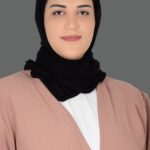
Linguistic Sensitivity: How Language Shapes Our Emotional and Social Responses (RECORDED)
The presentation will explore the concept of linguistic sensitivity, the unique emotional and cognitive connection we develop with the languages we speak, especially our mother tongue. It discusses how individuals experience a heightened awareness, intimacy, or sharpness when interacting in their native language, which influences not only their thought patterns anLinguistic Sensitivity: How Language Shapes Our Emotional and Social Responses
d behaviors but even the tone and rhythm of their speech.
The presentation will begin by examining the scientific and psychological underpinnings of this topic, how our emotional and cultural bond with a language is formed, often subconsciously. It will also explore the social and interpersonal situations where this sensitivity plays out without our awareness.
A key focus will be on language as a social and cultural agent, not merely a tool for communication, but a deeply embedded part of our emotional processing and psychological responses. For instance, some people who struggle to say “I’m sorry” in their native language may find it easier to apologize in a second language, such as using “Sorry” in French or any other common language. Similarly, people may react strongly to insults or emotionally charged words in their native tongue, yet feel far less affected, sometimes not even 40% as much, when hearing the same words in another language, even one they speak fluently.

The legacy of colonialism in the Caribbean (RECORDED)
The case of Puerto Rico, the world’s oldest colony, and its role in the propagation of Spanglish. A brief historic perspective followed by examples from the 20th and 21st centuries, all the way up to Bad Bunny and current popular culture, and parallels to California, where the indigenous languages were supplanted first by Spanish (in the XVIII century) and then by English (mid XIX century).
Modern and Classical Languages and Literature, California State University Northridge
English and Modern Languages Department, Los Angeles Southwest College
The Many Voices Within: A Study of Language and Identity (RECORDED)
How do people acquire knowledge of several languages? For some, it happens due to life circumstances, while for others it stems from personal interest. Often, it is a mix of both. This presentation will examine the diverse reasons behind language learning, the motivations people have, and the methods they use. It will also explore how much time people dedicate to studying, what qualities they believe are important for success, whether they see themselves as naturally gifted in languages, and how learning new languages affects their identity.
A survey conducted for my Master’s thesis in Modern Linguistics gathered insights from 67 participants through a 40-question questionnaire. The results revealed a wide range of approaches to language learning. Some participants were required to learn new languages for work, family, or relocation, while others pursued languages out of curiosity or passion. Many respondents shared that acquiring new languages had changed how they see themselves and the world around them. Some also felt that certain personal traits or biological predispositions helped them succeed.
Overall, the findings show that language acquisition rarely fits neatly into categories of free choice or necessity. The boundaries between multilingualism and polyglottery are more fluid than often assumed, shaped by individual experiences and circumstances.

Swagatham! An Introduction to Malayalam (RECORDED)
Let’s explore Malayalam, a Dravidian language from Kerala, South India. In this pre-recorded session, we’ll take a close look at Malayalam’s abugida script, learn some simple grammar patterns, and even dip into verb conjugation to see how the language comes together in action. Designed for curious beginners and seasoned polyglots alike, this session will give you support in your first steps with Malayalam. Afterward, join me live for a Q&A to ask questions and continue the conversation.

Unlocking Language Learning: How Sensory Memory and Shape Retention (LIVE)
Visual learners benefit from mind maps and imagery, while auditory learners excel through rhythm and sound repetition. Kinesthetic learners remember best when physically engaging with the language (e.g., gestures or movement-based learning), and reading/writing learners absorb information through text and note-taking.